The DigiWold Innovations
Navigating the Digital Landscape
What is Google Ads?
What is Google Ads? Simply put, it's an online advertising platform that has been connecting businesses with potential customers since 2000 .
Shakti Bishnoi
3/12/20266 min read


If you've ever searched for something on Google, you've certainly seen these ads in action—they're the sponsored results appearing at the top and bottom of search pages.
Formerly known as Google AdWords, Google Ads underwent a significant rebranding in 2018 when Google retired both the AdWords and DoubleClick brands to simplify the experience for advertisers . Essentially, Google Ads allows businesses to display brief digital advertisements, product listings, service offerings, and videos to web users across the internet . Since its launch, the platform has evolved considerably, particularly after Google's $3.1 billion acquisition of DoubleClick in 2007 , transforming how digital advertising works. Furthermore, recent updates like the introduction of the Topics API in 2023 and the "Ads Power Pair" feature in 2024 show how Google continues to innovate in the advertising space, improving both reach and bidding efficiency across channels .
What is Google Ads and Why It Matters
Google Ads stands as Google's powerful online advertising program that allows businesses to display their products or services precisely when people are searching for them. Unlike traditional advertising, Google Ads operates on a pay-per-click (PPC) model, meaning you only pay when someone clicks on your ad.
As the largest digital ad publisher in the United States, Google Ads accounts for 28.4% of all ad revenue and reaches an astonishing 90% of internet users across millions of websites through its Display Network.
The platform offers remarkable versatility by allowing advertisers to show ads across multiple channels. Your business can appear on Google search results, YouTube, Gmail, Google Maps, and millions of partner websites. Additionally, Google's AI analyzes millions of signals to identify high-intent customers ready to purchase—converting your ad budget into measurable revenue.
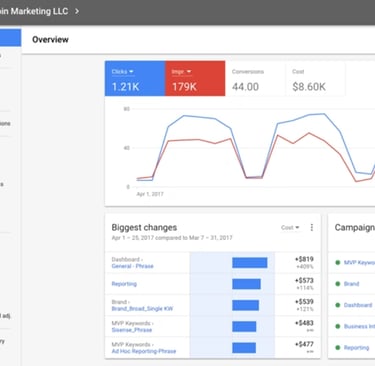
What makes Google Ads truly valuable is its precise targeting capabilities. You can focus your ads on specific demographics, locations, interests, and behaviors. Moreover, the platform provides detailed analytics including impressions, clicks, conversions, and cost analysis.
Google Ads differs from Google AdSense, which is for publishers wanting to monetize their websites by displaying ads—while Google Ads is specifically for advertisers looking to promote their products or services .
How Google Ads Works for Beginners
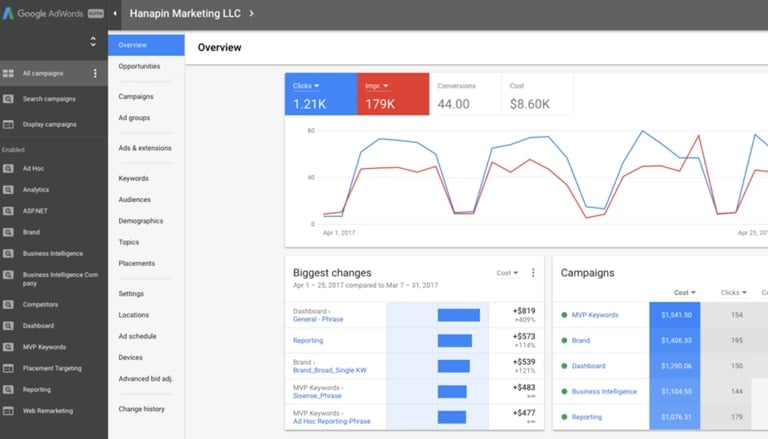
Image Source: PPC Hero
The foundation of Google Ads rests on its , which runs lightning-fast every time someone searches on Google auction system. This auction determines which ads appear and in what position based on several crucial factors.
At the heart of this process is your bid—the maximum amount you're willing to pay when someone clicks your ad. Yet, the actual amount you pay is often less than your maximum bid.
Your Quality Score plays a vital role too. This score evaluates your ad's relevance, landing page experience, and expected click-through rate. Higher quality ads can win better positions at lower prices, even against competitors with larger budgets .
For beginners, Google offers : Search, Display, Shopping, Video, App, Discovery, Local Services, Performance Max, and Smart nine campaign types[9]. Search ads are text-based and appear when people search for your keywords. Meanwhile, Shopping ads showcase product images, prices, and store names.
To start, you'll need to:
Choose relevant keywords using Keyword Planner
Set a comfortable daily budget with no minimum spending requirement
Select a bidding strategy based on your goals (clicks, conversions, or impression share)
After your campaign is live, conversion tracking helps measure valuable customer actions like purchases or sign-ups [14], allowing you to optimize performance over time.
Getting Started with Google Ads in 2025
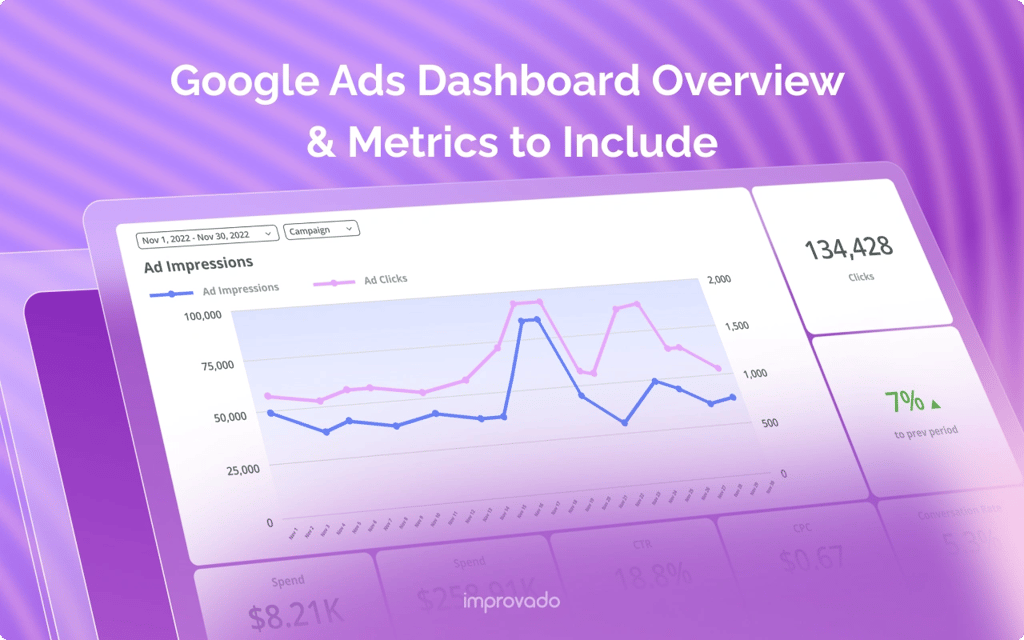
Image Source: Improvado
Setting up Google Ads in 2025 has become more intuitive for beginners. First, define clear campaign objectives—sales, leads, website traffic, brand awareness, or app promotion [15]. These objectives guide Google's AI to optimize your campaign for specific outcomes.
For newcomers, Search campaigns offer an accessible starting point, although Performance Max campaigns are gaining popularity due to their AI-powered optimization across all Google channels [16]. Performance Max helps drive results based on your conversion goals by automatically optimizing ad performance in real-time [17].
Before creating ads, establish your daily budget—you can start with —and select a bidding strategy like "Maximize Conversions" to let Google's AI work efficiently as little as $5 per day[18].
Next, craft compelling ad copy focusing on user benefits rather than pushy sales language [19]. In 2025, you can leverage Google's generative AI to create headlines and descriptions based on your landing page content [20].
After launching, monitor key performance metrics:
Clickthrough rate (aim for 5% or higher)
Conversion rate (3-5% is typical)
Cost per click
Quality Score
Implement conversion tracking to measure valuable customer actions like purchases or sign-ups . Subsequently, use the search terms report to identify high-performing keywords and add irrelevant searches as negative keywords to prevent wasted spending .
Conclusion
Google Ads has transformed from its AdWords origins into a sophisticated advertising platform that powers modern digital marketing strategies. Most businesses find Google Ads valuable because it offers precise targeting capabilities while operating on a cost-effective pay-per-click model. Additionally, the platform's extensive reach across search results, YouTube, Gmail, and partner websites ensures your message reaches potential customers wherever they browse online.
Setting up your first campaign doesn't require massive budgets. You can start with just $5 daily and scale as your confidence grows. Furthermore, Google's AI-powered tools like Performance Max campaigns work tirelessly to optimize your spending across all available channels.
Success with Google Ads demands attention to key metrics such as clickthrough rates, conversion rates, and Quality Score. Though the platform might seem complex initially, Google has made significant strides to simplify the experience for beginners in 2025. The auction system rewards relevant, high-quality ads—meaning smaller businesses can effectively compete against larger competitors through strategic approach rather than sheer spending power.
We recommend starting with Search campaigns to build fundamentals before exploring other options. After all, mastering Google Ads takes time, but the potential return on investment makes it worthwhile for businesses of all sizes. Google Ads continues to evolve with new features and AI capabilities, therefore staying informed about platform updates will help maximize your advertising effectiveness in the increasingly competitive digital landscape of 2025 and beyond.
Key Takeaways
Google Ads is a powerful yet accessible advertising platform that can transform your business reach when understood properly. Here are the essential insights every beginner should know:
• Start small and scale smart: Begin with just $5 daily budget and grow as you gain confidence and see results from your campaigns.
• Quality beats budget: Google's auction system rewards relevant, high-quality ads over high spending, letting small businesses compete effectively against larger competitors.
• AI does the heavy lifting: Use Performance Max campaigns and Google's AI tools to automatically optimize your ads across all channels for better results.
• Track what matters: Monitor clickthrough rates (aim for 5%+), conversion rates (3-5%), and Quality Score to measure real business impact.
• Search campaigns are your starting point: Master Search ads first before exploring other campaign types to build solid fundamentals.
The platform's pay-per-click model means you only pay when people actually click your ads, making it a cost-effective way to reach 90% of internet users across Google's vast network of search results, YouTube, Gmail, and partner websites.
FAQs
Q1. How does Google Ads function in 2025? Google Ads operates on a pay-per-click model, where advertisers bid on keywords relevant to their target audience. The system uses an auction process to determine ad placement, considering factors like bid amount and ad quality. In 2025, Google Ads leverages AI-powered tools like Performance Max to optimize campaigns across multiple channels automatically.
Q2. Is investing time in learning Google Ads worthwhile in 2025? Yes, learning Google Ads is valuable in 2025. It allows businesses to connect with high-intent users actively searching for their products or services. The platform's extensive reach and precise targeting capabilities make it an effective tool for businesses of all sizes. However, success depends on proper campaign setup, management, and understanding of your industry and target audience.
Q3. What should beginners focus on when starting with Google Ads? Beginners should start by setting clear campaign objectives and a comfortable daily budget (as low as $5 per day). Focus on Search campaigns initially to build fundamentals. Craft compelling ad copy that highlights user benefits, and use Google's Keyword Planner to select relevant keywords. Monitor key metrics like clickthrough rate and conversion rate, and implement conversion tracking to measure valuable customer actions.
Q4. What are the key features of Google Ads for newcomers?
Key features for newcomers include the user-friendly interface, various campaign types (e.g., Search, Display, Shopping), AI-powered optimization tools, and detailed analytics. Google Ads offers precise targeting options based on demographics, locations, and user behavior. The platform also provides tools like Keyword Planner and AI-assisted ad creation to help beginners create effective campaigns.
Q5. How has Google Ads evolved for 2025?
Google Ads has become more intuitive and AI-driven in 2025. The platform now offers enhanced AI tools for ad creation and optimization, such as Performance Max campaigns that work across all Google channels. There's an increased focus on privacy-centric conversion tracking and cross-platform performance measurement. Google has also simplified the experience for advertisers, making it easier for beginners to start and manage successful campaigns.
Got a project to discuss?
Ready to transform your business? Let’s discuss your current goals and vision, then build a tailored digital strategy designed to elevate your brand and drive measurable growth online